

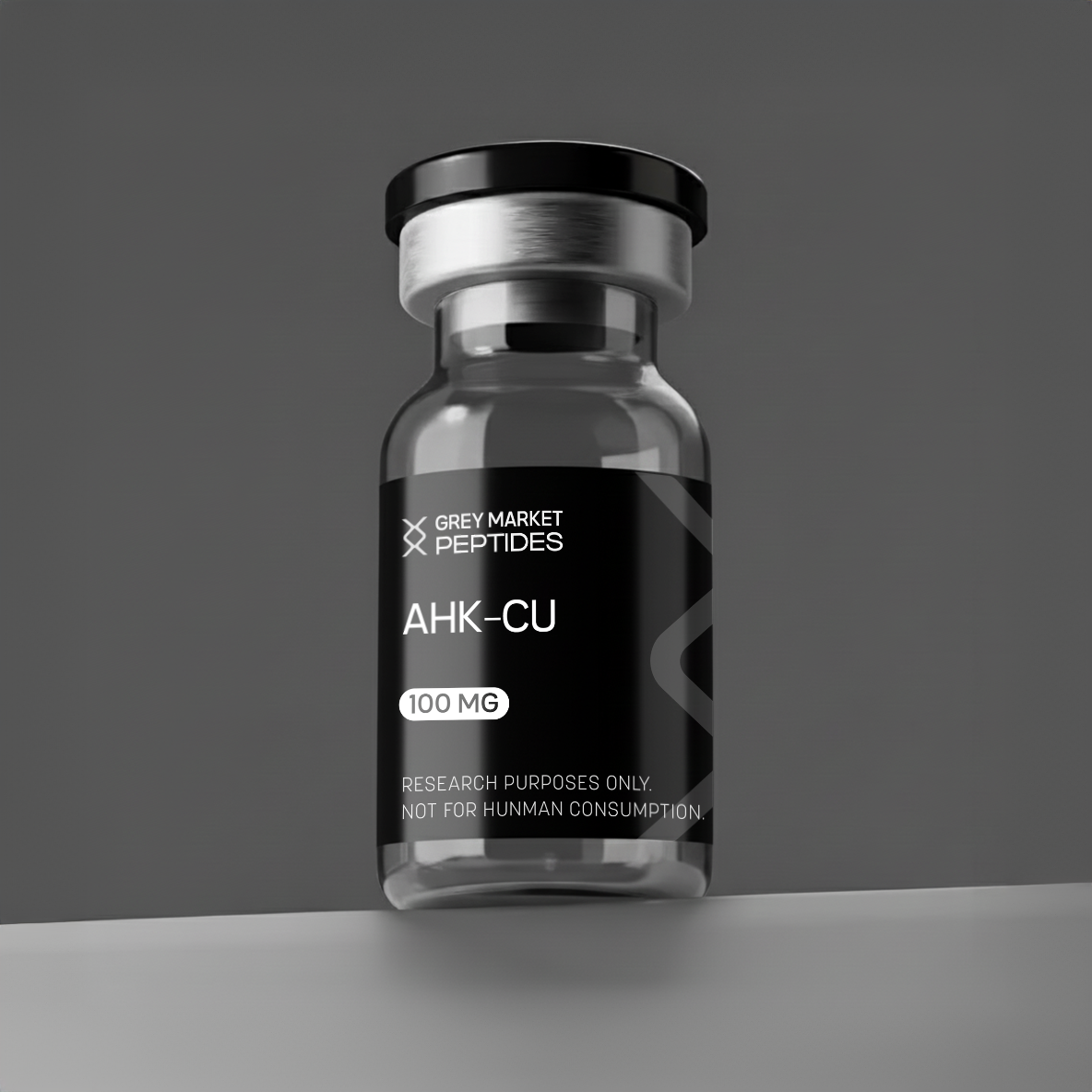
AHK-Cu
$52.49
AHK-Cu is a naturally occurring copper-binding tripeptide widely studied in biochemical and cellular research. In laboratory settings, it is explored for its interaction with copper ions, extracellular matrix signaling, and gene expression modulation. Supplied strictly for research use only, not for human or veterinary consumption.
In stock
Description
Overview of AHK-Cu in Biochemical Research
AHK-Cu, also known as Copper Tripeptide-1, is a small peptide complex composed of alanine, histidine, and lysine bound to a copper ion. In research contexts, it has attracted attention due to its role as a naturally occurring signaling molecule found in human plasma, saliva, and urine. Studies suggest that AHK-Cu can bind copper(II) with high affinity, making it a useful model compound for investigating copper transport, bioavailability, and peptide–metal interactions at the molecular level. Researchers frequently utilize AHK-Cu to study how trace metals influence cellular communication, protein synthesis, and enzymatic activity. Its stability and well-characterized structure allow it to be used as a reference compound in analytical chemistry, peptide synthesis validation, and metal–ligand binding studies. These properties have positioned AHK-Cu as a valuable tool in both biochemical and molecular biology research environments. [1][2]
Applications in Cellular and Molecular Biology Studies
Within cellular research, AHK-Cu is often examined for its effects on gene expression pathways related to tissue remodeling and cellular growth signals. Experimental data indicate that this peptide complex may influence the transcription of genes associated with extracellular matrix components, such as collagen and glycosaminoglycans, under controlled laboratory conditions. As a result, it is frequently included in in-vitro models designed to explore cell signaling cascades, wound-response mechanisms, and oxidative stress modulation. Additionally, AHK-Cu has been referenced in studies evaluating antioxidant enzyme activity and cellular defense systems against reactive oxygen species. These investigations are strictly conducted in controlled research settings and contribute to a broader understanding of peptide-mediated signaling rather than clinical outcomes. Its reproducibility and documented molecular behavior make it suitable for comparative studies across different cell lines and experimental designs. [2][3]
Relevance in Analytical and Materials Research
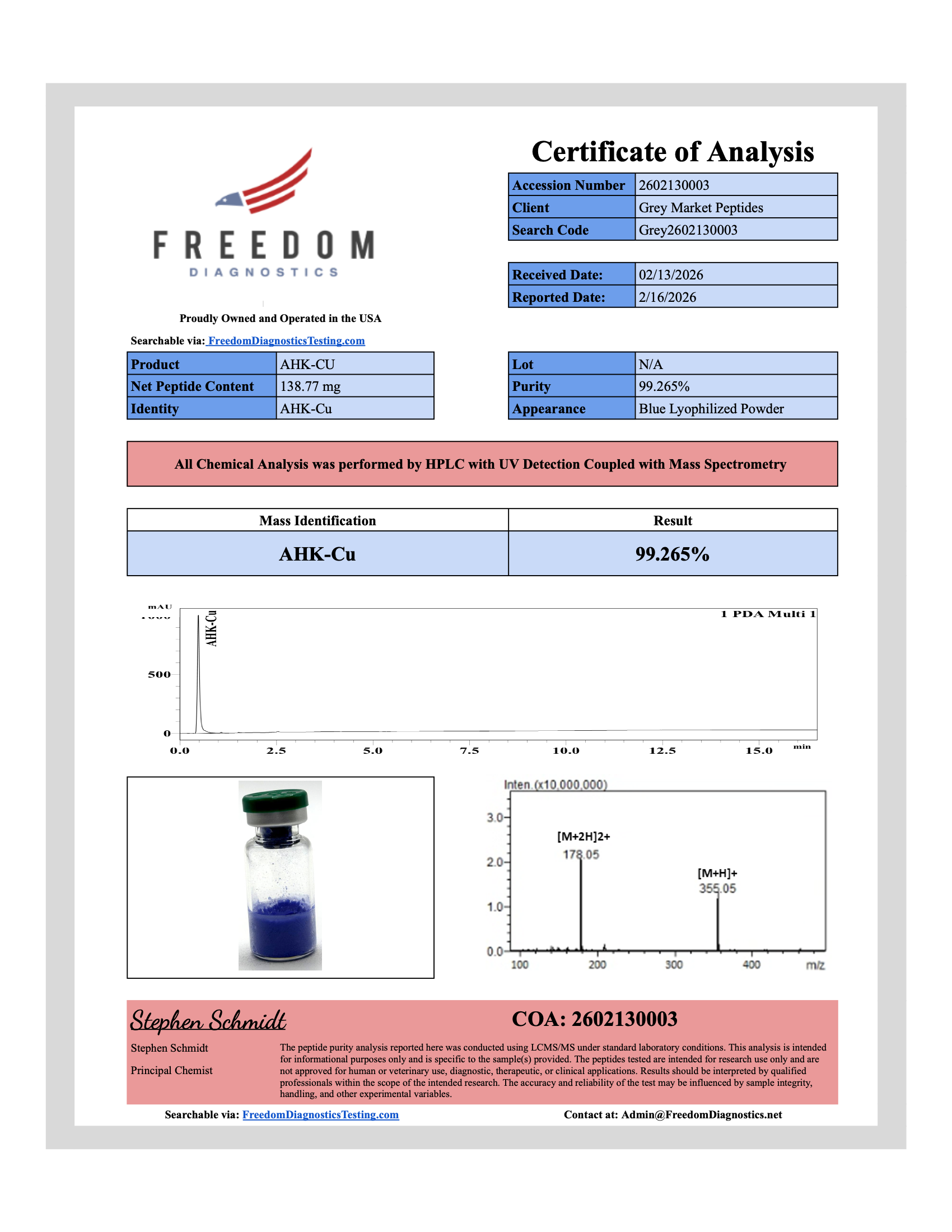
Beyond biological studies, AHK-Cu is also utilized in analytical chemistry and materials science research. Its defined molecular weight and copper coordination geometry make it useful for method development in spectroscopy, chromatography, and mass spectrometry. Researchers may employ AHK-Cu as a standard when validating peptide purity, metal chelation assays, or degradation profiles under varying environmental conditions. Furthermore, its interaction with surfaces and polymers has been explored in experimental coatings and biomimetic material studies, where peptide–metal complexes are investigated for their physicochemical properties. These non-clinical applications highlight the versatility of AHK-Cu as a research compound across multiple scientific disciplines. All uses remain confined to laboratory research and analytical investigation only. [1][3]
Referenced Citations
- PubChem. Copper Tripeptide-1 (AHK-Cu), PubChem Compound Summary, CID: 161299.
https://pubchem.ncbi.nlm.nih.gov/compound/161299
- Pickart, L., et al. The Human Tripeptide GHK and Tissue Remodeling. Journal of Biomaterials Science.
https://pubmed.ncbi.nlm.nih.gov/ -
Hostýnek, J.J., & Maibach, H.I. Copper Peptides in Biology and Research. Inorganica Chimica Acta.
https://www.sciencedirect.com/
For research purposes only. Not for human consumption.
Overview of AHK-Cu in Biochemical Research
AHK-Cu, also known as Copper Tripeptide-1, is a small peptide complex composed of alanine, histidine, and lysine bound to a copper ion. In research contexts, it has attracted attention due to its role as a naturally occurring signaling molecule found in human plasma, saliva, and urine. Studies suggest that AHK-Cu can bind copper(II) with high affinity, making it a useful model compound for investigating copper transport, bioavailability, and peptide–metal interactions at the molecular level. Researchers frequently utilize AHK-Cu to study how trace metals influence cellular communication, protein synthesis, and enzymatic activity. Its stability and well-characterized structure allow it to be used as a reference compound in analytical chemistry, peptide synthesis validation, and metal–ligand binding studies. These properties have positioned AHK-Cu as a valuable tool in both biochemical and molecular biology research environments. [1][2]
Applications in Cellular and Molecular Biology Studies
Within cellular research, AHK-Cu is often examined for its effects on gene expression pathways related to tissue remodeling and cellular growth signals. Experimental data indicate that this peptide complex may influence the transcription of genes associated with extracellular matrix components, such as collagen and glycosaminoglycans, under controlled laboratory conditions. As a result, it is frequently included in in-vitro models designed to explore cell signaling cascades, wound-response mechanisms, and oxidative stress modulation. Additionally, AHK-Cu has been referenced in studies evaluating antioxidant enzyme activity and cellular defense systems against reactive oxygen species. These investigations are strictly conducted in controlled research settings and contribute to a broader understanding of peptide-mediated signaling rather than clinical outcomes. Its reproducibility and documented molecular behavior make it suitable for comparative studies across different cell lines and experimental designs. [2][3]
Relevance in Analytical and Materials Research
Beyond biological studies, AHK-Cu is also utilized in analytical chemistry and materials science research. Its defined molecular weight and copper coordination geometry make it useful for method development in spectroscopy, chromatography, and mass spectrometry. Researchers may employ AHK-Cu as a standard when validating peptide purity, metal chelation assays, or degradation profiles under varying environmental conditions. Furthermore, its interaction with surfaces and polymers has been explored in experimental coatings and biomimetic material studies, where peptide–metal complexes are investigated for their physicochemical properties. These non-clinical applications highlight the versatility of AHK-Cu as a research compound across multiple scientific disciplines. All uses remain confined to laboratory research and analytical investigation only. [1][3]
Referenced Citations
- PubChem. Copper Tripeptide-1 (AHK-Cu), PubChem Compound Summary, CID: 161299.
https://pubchem.ncbi.nlm.nih.gov/compound/161299
- Pickart, L., et al. The Human Tripeptide GHK and Tissue Remodeling. Journal of Biomaterials Science.
https://pubmed.ncbi.nlm.nih.gov/ -
Hostýnek, J.J., & Maibach, H.I. Copper Peptides in Biology and Research. Inorganica Chimica Acta.
https://www.sciencedirect.com/
For research purposes only. Not for human consumption.