


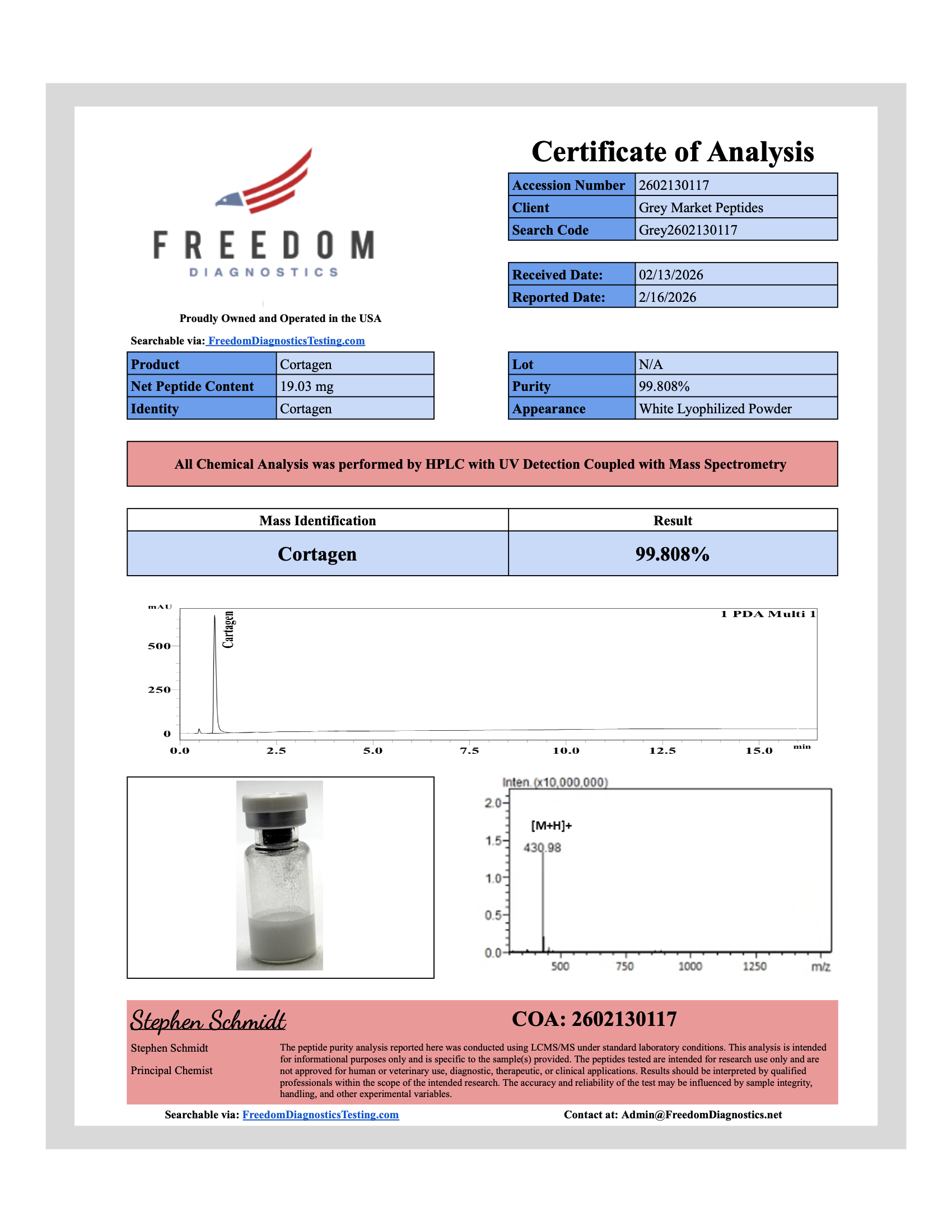
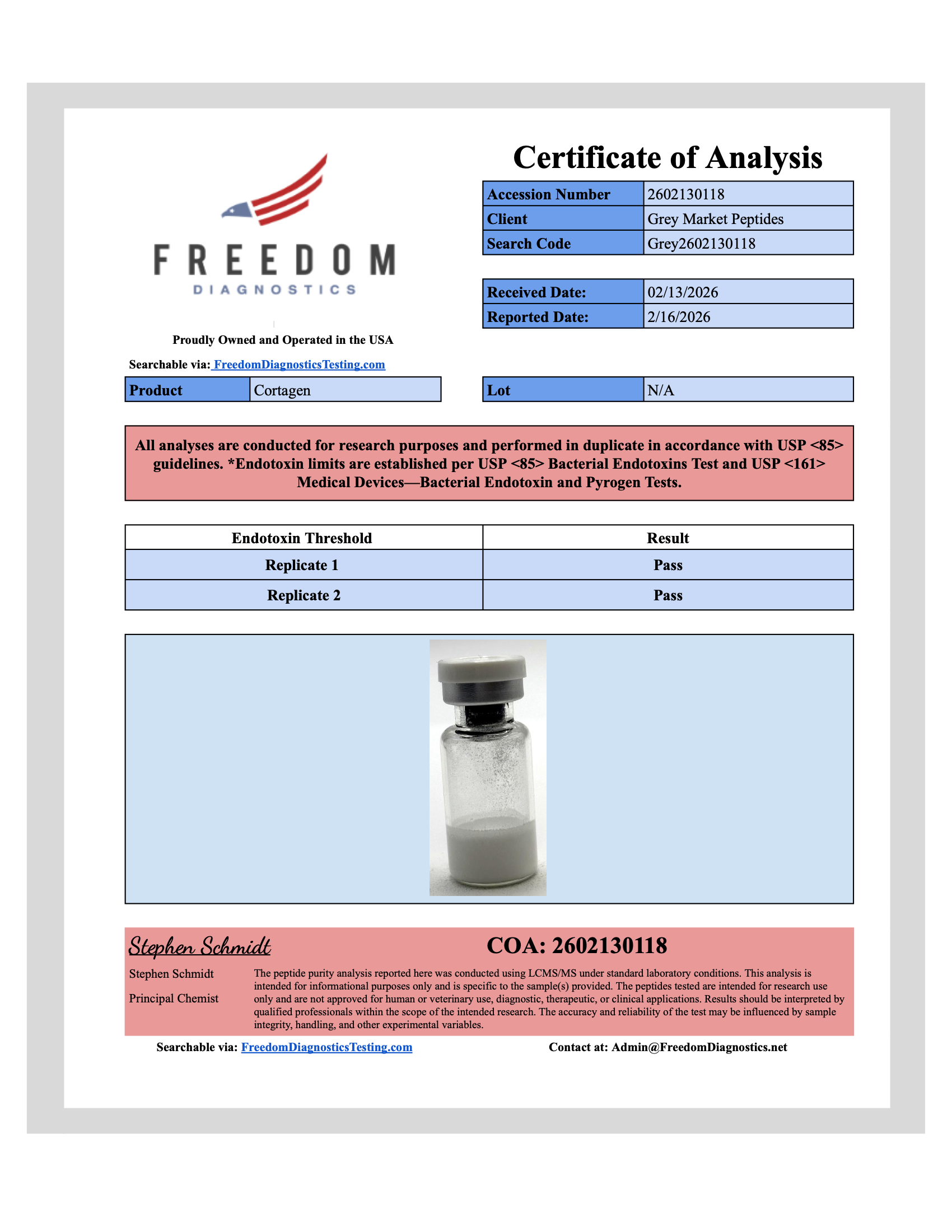
Cortagen
$45.49
Cortagen is a synthetic peptide studied in neuroscience research focusing on cortical neuron biology. Laboratory investigations explore its interaction with neural cells and signaling pathways associated with cortical tissue stability, neuronal communication, and cellular maintenance within the central nervous system.
This peptide is for research purposes only. Not for human consumption.
In stock
Description
Cortical Neuron Biology
Cortagen is frequently studied in laboratory models focused on the biology of cortical neurons. The cerebral cortex contains complex networks of neurons responsible for higher neurological functions including cognition, sensory integration, and neural processing.
Researchers often examine peptides like Cortagen to explore how molecular signaling compounds interact with cortical neurons. Laboratory experiments may analyze cellular communication pathways, gene expression patterns, and intracellular signaling mechanisms that regulate neuronal activity. Understanding these interactions provides valuable insight into how cortical cells maintain their structural organization and functional stability.
Neural Communication Pathways
The central nervous system relies on highly coordinated signaling between neurons to maintain proper communication and network activity. Peptides such as Cortagen are used in experimental models to investigate molecular pathways involved in neuronal signaling and intracellular communication.
Researchers analyze how peptide signaling influences neurotransmission pathways, cellular signaling cascades, and neuronal network interactions. These laboratory studies help scientists understand how neurons coordinate communication and maintain stable signaling environments within the brain.
Cortical Tissue Stability Research
Maintaining the structural integrity of cortical tissue is a key focus in neuroscience research. Laboratory studies often investigate molecular factors that influence neuronal resilience and cellular maintenance within brain tissue.
Cortagen may be explored as a research tool for examining how peptides interact with signaling pathways related to neuronal stability. By studying peptide interactions within neural cells, researchers can gain insight into the biological mechanisms that support cortical tissue organization and cellular survival.
Cortical Neuron Biology
Cortagen is frequently studied in laboratory models focused on the biology of cortical neurons. The cerebral cortex contains complex networks of neurons responsible for higher neurological functions including cognition, sensory integration, and neural processing.
Researchers often examine peptides like Cortagen to explore how molecular signaling compounds interact with cortical neurons. Laboratory experiments may analyze cellular communication pathways, gene expression patterns, and intracellular signaling mechanisms that regulate neuronal activity. Understanding these interactions provides valuable insight into how cortical cells maintain their structural organization and functional stability.
Neural Communication Pathways
The central nervous system relies on highly coordinated signaling between neurons to maintain proper communication and network activity. Peptides such as Cortagen are used in experimental models to investigate molecular pathways involved in neuronal signaling and intracellular communication.
Researchers analyze how peptide signaling influences neurotransmission pathways, cellular signaling cascades, and neuronal network interactions. These laboratory studies help scientists understand how neurons coordinate communication and maintain stable signaling environments within the brain.
Cortical Tissue Stability Research
Maintaining the structural integrity of cortical tissue is a key focus in neuroscience research. Laboratory studies often investigate molecular factors that influence neuronal resilience and cellular maintenance within brain tissue.
Cortagen may be explored as a research tool for examining how peptides interact with signaling pathways related to neuronal stability. By studying peptide interactions within neural cells, researchers can gain insight into the biological mechanisms that support cortical tissue organization and cellular survival.