




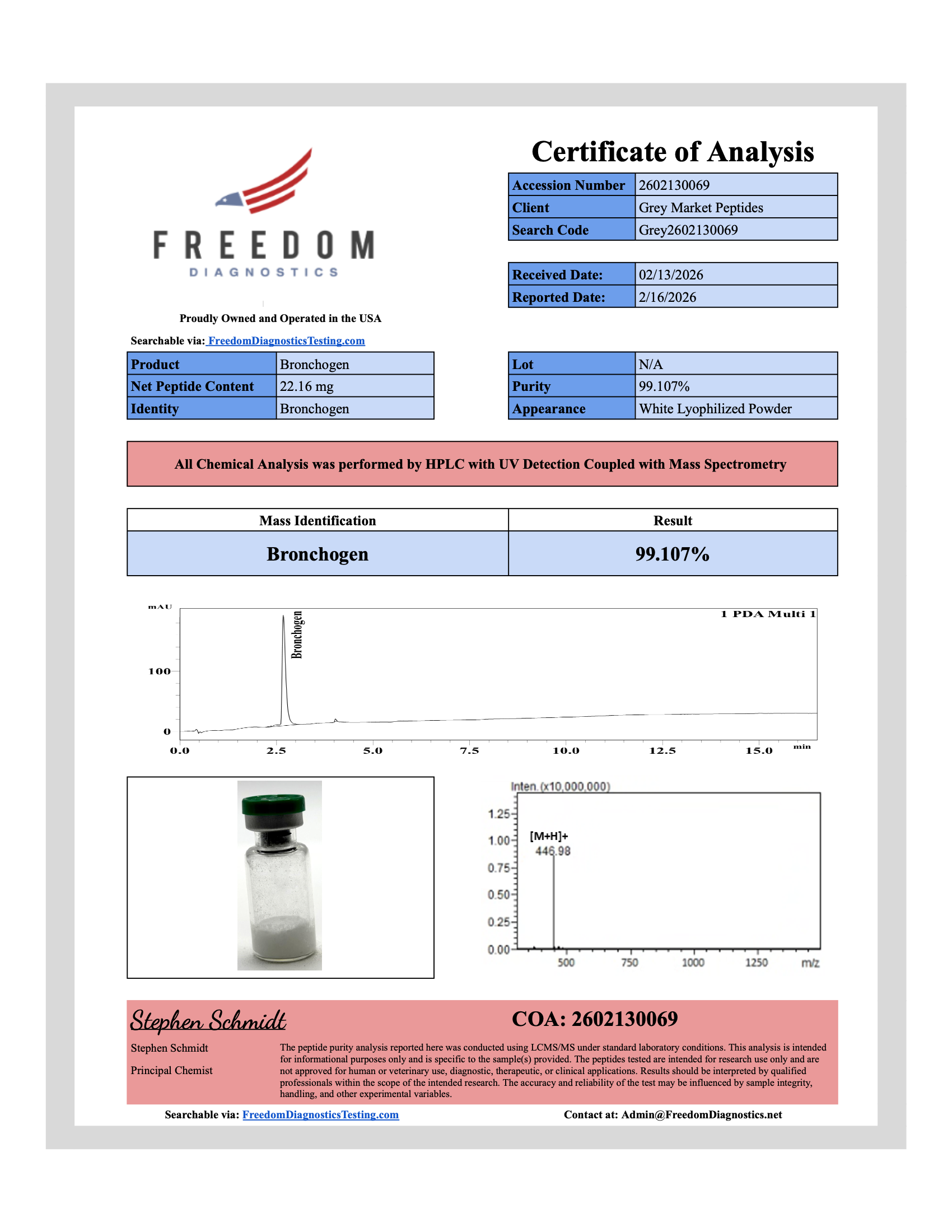
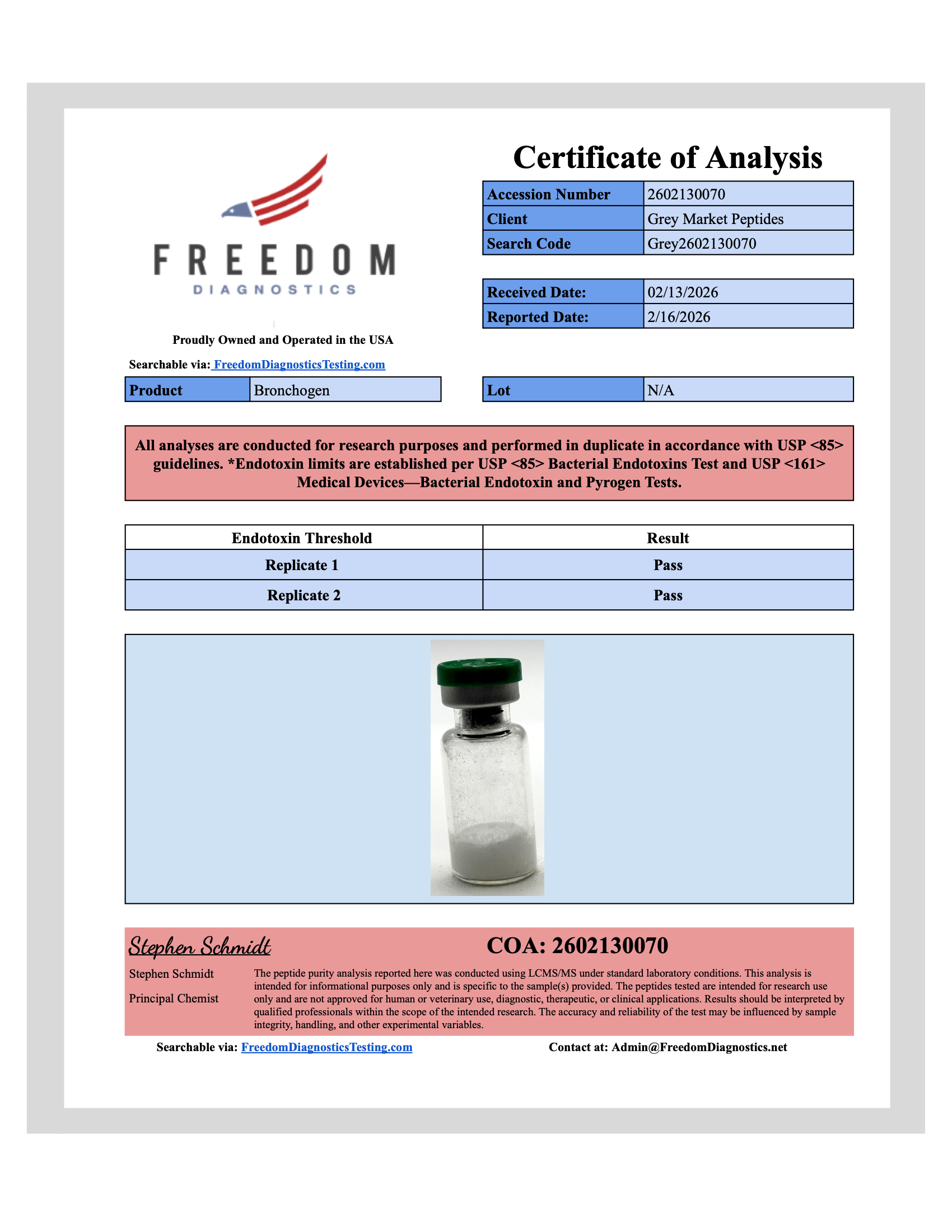
Bronchogen
$45.49
Bronchogen is a synthetic peptide studied in respiratory biology research. Laboratory investigations examine its interaction with bronchial epithelial cells and signaling pathways associated with airway tissue structure, respiratory cell communication, and epithelial stability.
This peptide is for research purposes only. Not for human consumption.
In stock
Description
Bronchial Epithelial Cell Biology
Bronchial epithelial cells line the respiratory airways and serve as a protective barrier against environmental exposure. Bronchogen is studied in laboratory models involving these cells to better understand airway tissue signaling.
Researchers explore how peptide molecules interact with bronchial epithelial cells and influence cellular signaling pathways. These studies help scientists analyze how epithelial cells regulate airway tissue stability and cellular communication.
Respiratory Signaling Mechanisms
Respiratory tissues rely on coordinated signaling pathways to maintain airway function and structural organization. Laboratory research involving Bronchogen often focuses on examining how peptides interact with respiratory cellular communication systems.
Scientists may analyze intracellular signaling pathways and cellular responses within bronchial tissues when exposed to peptide compounds. These studies contribute to understanding the molecular mechanisms that regulate respiratory epithelial stability.
Airway Tissue Stability Research
Maintaining airway tissue integrity is essential for proper respiratory function. Research models involving Bronchogen may investigate molecular pathways associated with epithelial maintenance and tissue organization.
By studying peptide interactions within bronchial cells, researchers can observe how signaling pathways influence cellular resilience and structural stability within airway tissues.
Bronchial Epithelial Cell Biology
Bronchial epithelial cells line the respiratory airways and serve as a protective barrier against environmental exposure. Bronchogen is studied in laboratory models involving these cells to better understand airway tissue signaling.
Researchers explore how peptide molecules interact with bronchial epithelial cells and influence cellular signaling pathways. These studies help scientists analyze how epithelial cells regulate airway tissue stability and cellular communication.
Respiratory Signaling Mechanisms
Respiratory tissues rely on coordinated signaling pathways to maintain airway function and structural organization. Laboratory research involving Bronchogen often focuses on examining how peptides interact with respiratory cellular communication systems.
Scientists may analyze intracellular signaling pathways and cellular responses within bronchial tissues when exposed to peptide compounds. These studies contribute to understanding the molecular mechanisms that regulate respiratory epithelial stability.
Airway Tissue Stability Research
Maintaining airway tissue integrity is essential for proper respiratory function. Research models involving Bronchogen may investigate molecular pathways associated with epithelial maintenance and tissue organization.
By studying peptide interactions within bronchial cells, researchers can observe how signaling pathways influence cellular resilience and structural stability within airway tissues.
Related products
-

GLP1 SEMA + B12
$83.99 Add to cart -

AOD9604
Price range: $41.99 through $69.99 Select options This product has multiple variants. The options may be chosen on the product page -

PE-22-28
$52.99 Add to cart -
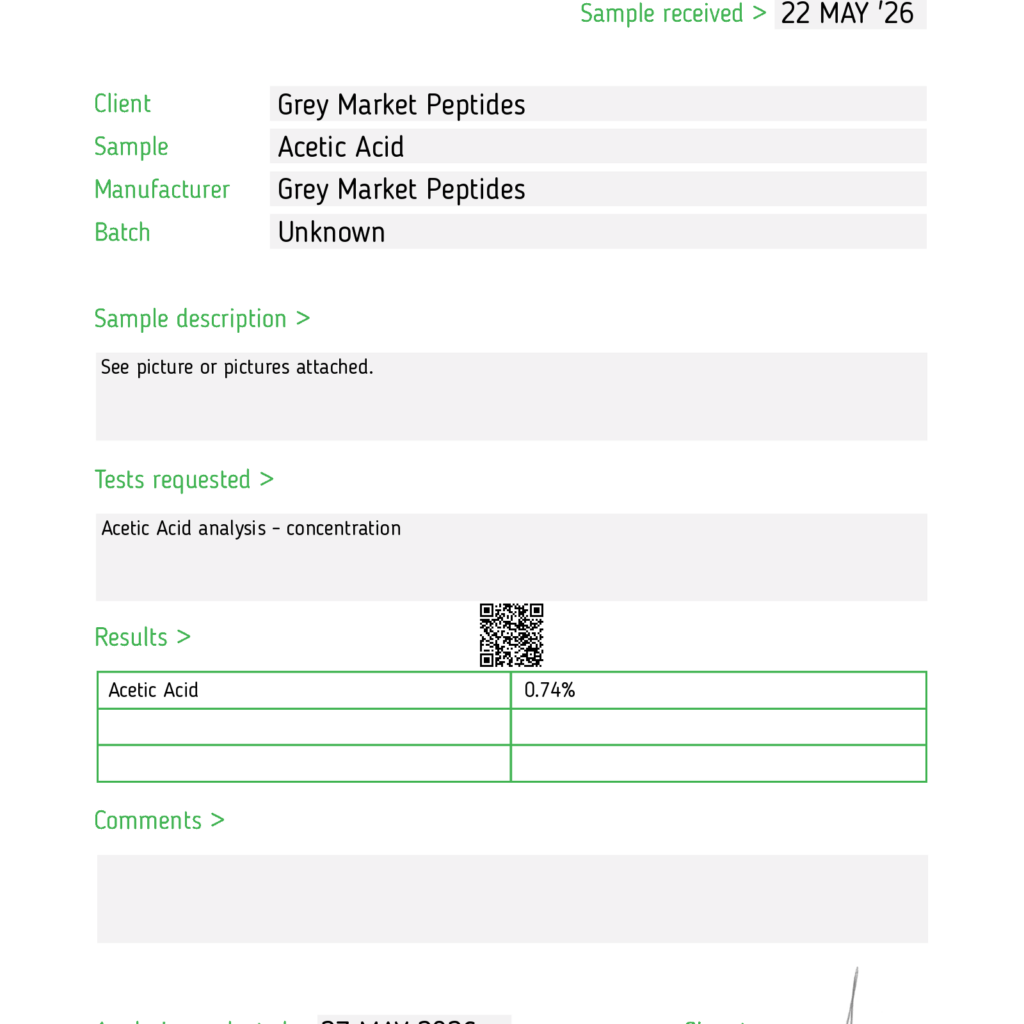

Acetic Acid (0.6%)
$9.99 Add to cart