


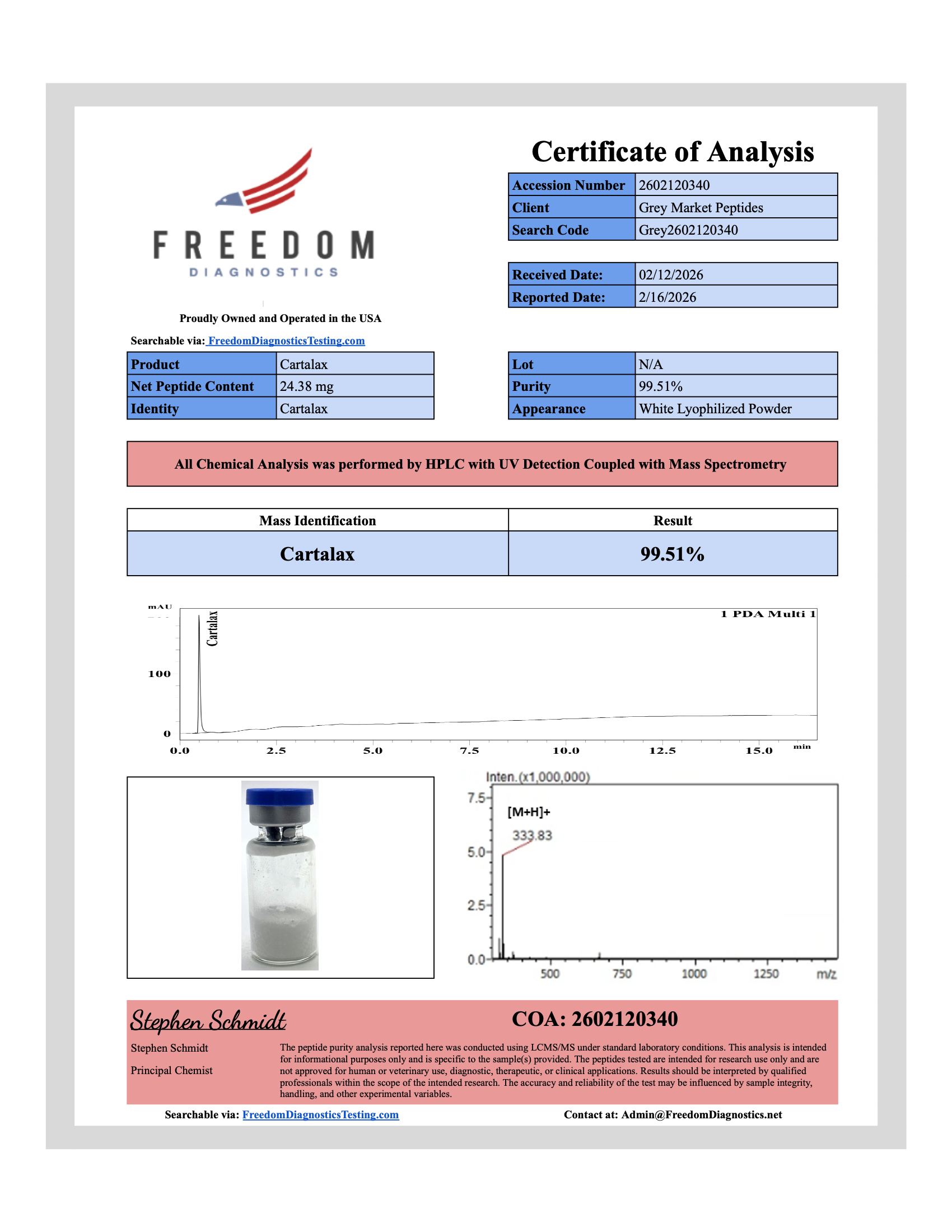
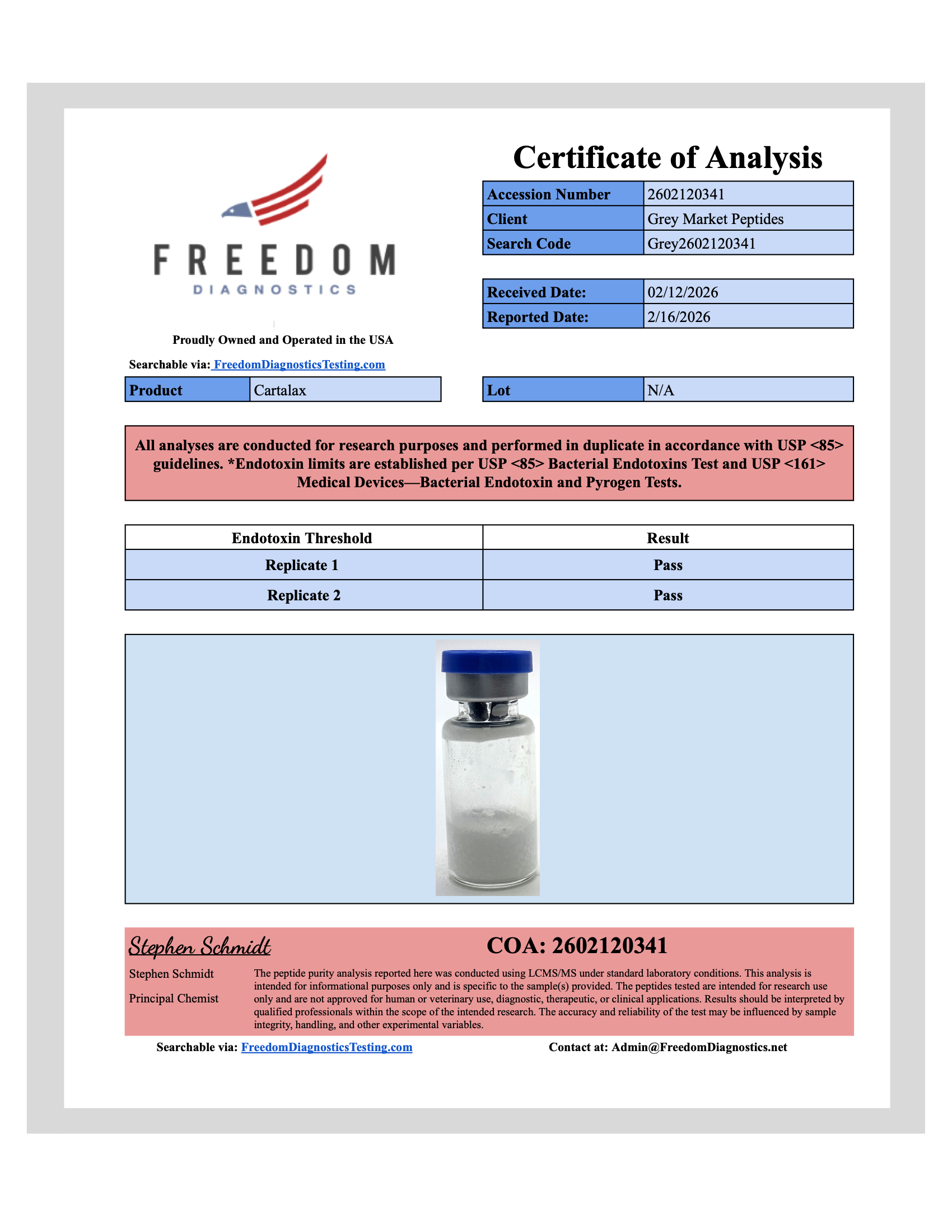
Cartalax
$45.49
Cartalax is a synthetic peptide studied in connective tissue and cartilage biology research. Laboratory investigations explore its interaction with chondrocytes and extracellular matrix signaling pathways associated with cartilage structure, cellular communication, and connective tissue maintenance.
This peptide is for research purposes only. Not for human consumption.
In stock
Description
Chondrocyte Cellular Biology
Cartalax is frequently examined in laboratory models focused on chondrocytes, the specialized cells responsible for producing and maintaining cartilage tissue. These cells play a central role in regulating extracellular matrix composition and structural organization within connective tissues.
Researchers studying cartilage biology may utilize peptides like Cartalax to observe how signaling molecules interact with chondrocytes and influence cellular communication pathways. Experimental studies often analyze gene expression patterns, intracellular signaling systems, and molecular responses within cartilage cells.
Extracellular Matrix Regulation
Cartilage tissue relies heavily on the extracellular matrix, a complex network of structural proteins that provide mechanical support and regulate cellular behavior. Research involving Cartalax often examines how peptide molecules interact with signaling pathways associated with matrix production and maintenance.
Laboratory investigations may evaluate how peptides influence collagen synthesis, matrix organization, and cellular signaling within cartilage models. Understanding these processes helps researchers explore how connective tissues maintain structural stability and respond to biological stress.
Connective Tissue Research Models
Research focused on connective tissue frequently involves studying how cellular communication supports tissue maintenance and repair. Cartalax may be examined in experimental models designed to analyze the biological mechanisms involved in cartilage tissue organization.
By studying peptide interactions with cartilage cells and extracellular structures, researchers can gain insight into the signaling pathways that regulate connective tissue stability and cellular adaptation in laboratory environments.
Chondrocyte Cellular Biology
Cartalax is frequently examined in laboratory models focused on chondrocytes, the specialized cells responsible for producing and maintaining cartilage tissue. These cells play a central role in regulating extracellular matrix composition and structural organization within connective tissues.
Researchers studying cartilage biology may utilize peptides like Cartalax to observe how signaling molecules interact with chondrocytes and influence cellular communication pathways. Experimental studies often analyze gene expression patterns, intracellular signaling systems, and molecular responses within cartilage cells.
Extracellular Matrix Regulation
Cartilage tissue relies heavily on the extracellular matrix, a complex network of structural proteins that provide mechanical support and regulate cellular behavior. Research involving Cartalax often examines how peptide molecules interact with signaling pathways associated with matrix production and maintenance.
Laboratory investigations may evaluate how peptides influence collagen synthesis, matrix organization, and cellular signaling within cartilage models. Understanding these processes helps researchers explore how connective tissues maintain structural stability and respond to biological stress.
Connective Tissue Research Models
Research focused on connective tissue frequently involves studying how cellular communication supports tissue maintenance and repair. Cartalax may be examined in experimental models designed to analyze the biological mechanisms involved in cartilage tissue organization.
By studying peptide interactions with cartilage cells and extracellular structures, researchers can gain insight into the signaling pathways that regulate connective tissue stability and cellular adaptation in laboratory environments.