


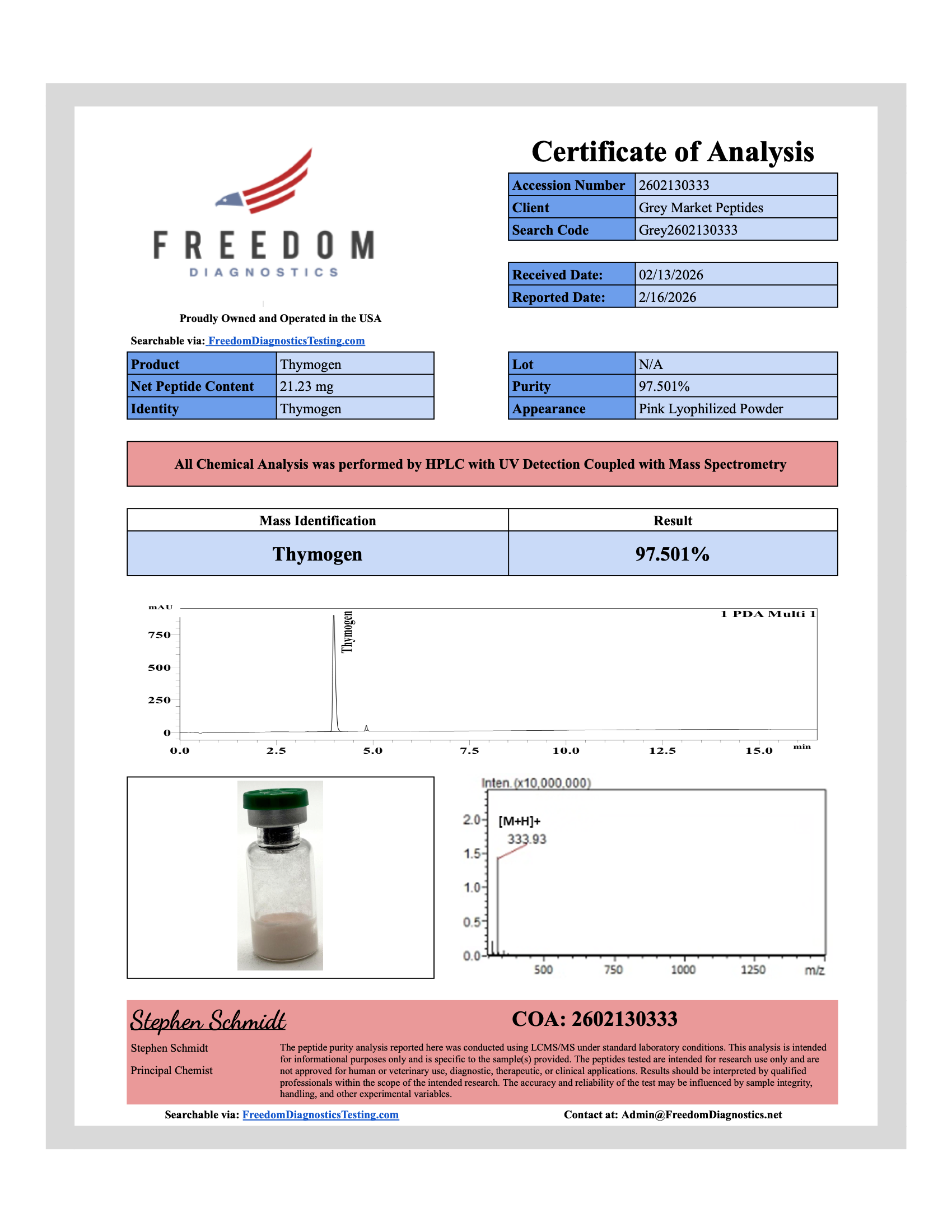
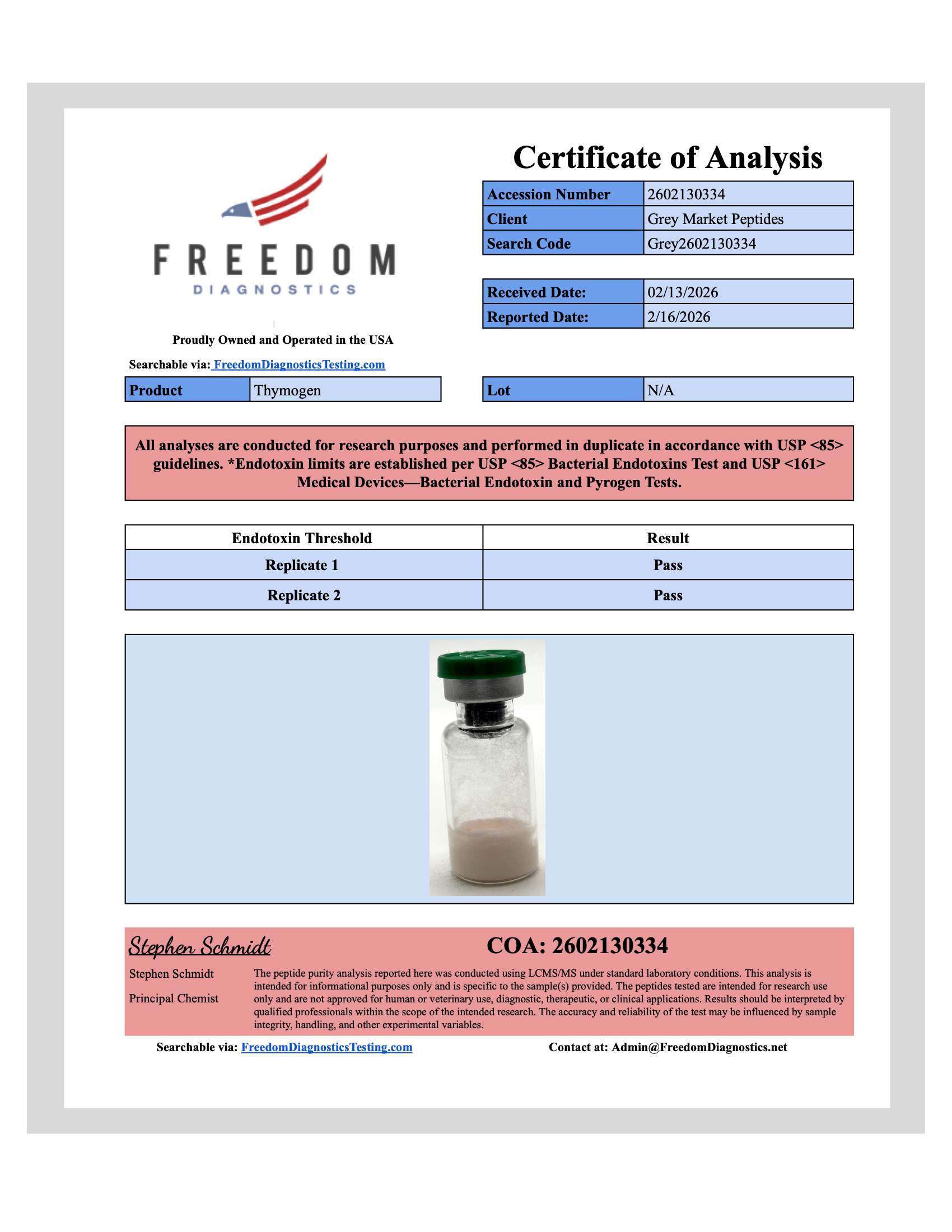
Thymogen
$48.99
Thymogen is a short synthetic peptide studied in immunology research involving thymus tissue and immune system signaling pathways. Laboratory investigations examine its interaction with immune cells and molecular mechanisms associated with immune cell development and cellular communication.
This peptide is for research purposes only. Not for human consumption.
In stock
Description
Thymus Tissue Biology
The thymus is a specialized immune organ responsible for the development and maturation of certain immune cell populations. Thymogen is often investigated in laboratory models studying thymic cellular activity and immune system signaling.
Researchers examine how peptides interact with thymic cells and influence molecular pathways associated with immune cell differentiation and communication. Experimental systems may focus on gene expression patterns and intracellular signaling networks within thymus tissue.
Immune System Signaling
The immune system relies on coordinated signaling mechanisms that allow immune cells to communicate and respond to environmental stimuli. Peptides such as Thymogen are studied in laboratory environments to explore how molecular signals influence these communication pathways.
Research models may analyze how peptide signaling interacts with intracellular pathways that regulate immune cell activity. These studies help scientists better understand how immune cells coordinate responses within complex biological systems.
Immunological Cellular Studies
Laboratory investigations into immune biology frequently explore molecular signals that influence immune cell behavior and tissue communication. Thymogen may be used as a research tool in experimental models examining immune cell signaling and cellular adaptation.
By analyzing peptide interactions with immune cells, researchers gain insight into the biological mechanisms that regulate immune system communication and tissue organization.
Thymus Tissue Biology
The thymus is a specialized immune organ responsible for the development and maturation of certain immune cell populations. Thymogen is often investigated in laboratory models studying thymic cellular activity and immune system signaling.
Researchers examine how peptides interact with thymic cells and influence molecular pathways associated with immune cell differentiation and communication. Experimental systems may focus on gene expression patterns and intracellular signaling networks within thymus tissue.
Immune System Signaling
The immune system relies on coordinated signaling mechanisms that allow immune cells to communicate and respond to environmental stimuli. Peptides such as Thymogen are studied in laboratory environments to explore how molecular signals influence these communication pathways.
Research models may analyze how peptide signaling interacts with intracellular pathways that regulate immune cell activity. These studies help scientists better understand how immune cells coordinate responses within complex biological systems.
Immunological Cellular Studies
Laboratory investigations into immune biology frequently explore molecular signals that influence immune cell behavior and tissue communication. Thymogen may be used as a research tool in experimental models examining immune cell signaling and cellular adaptation.
By analyzing peptide interactions with immune cells, researchers gain insight into the biological mechanisms that regulate immune system communication and tissue organization.